How to Clean Clear Aligners
Clear aligners need gentle, regular cleaning to stay clear and smell fresh. This page gives general education, not medical advice, and a licensed orthodontist should advise you after an in-person exam.
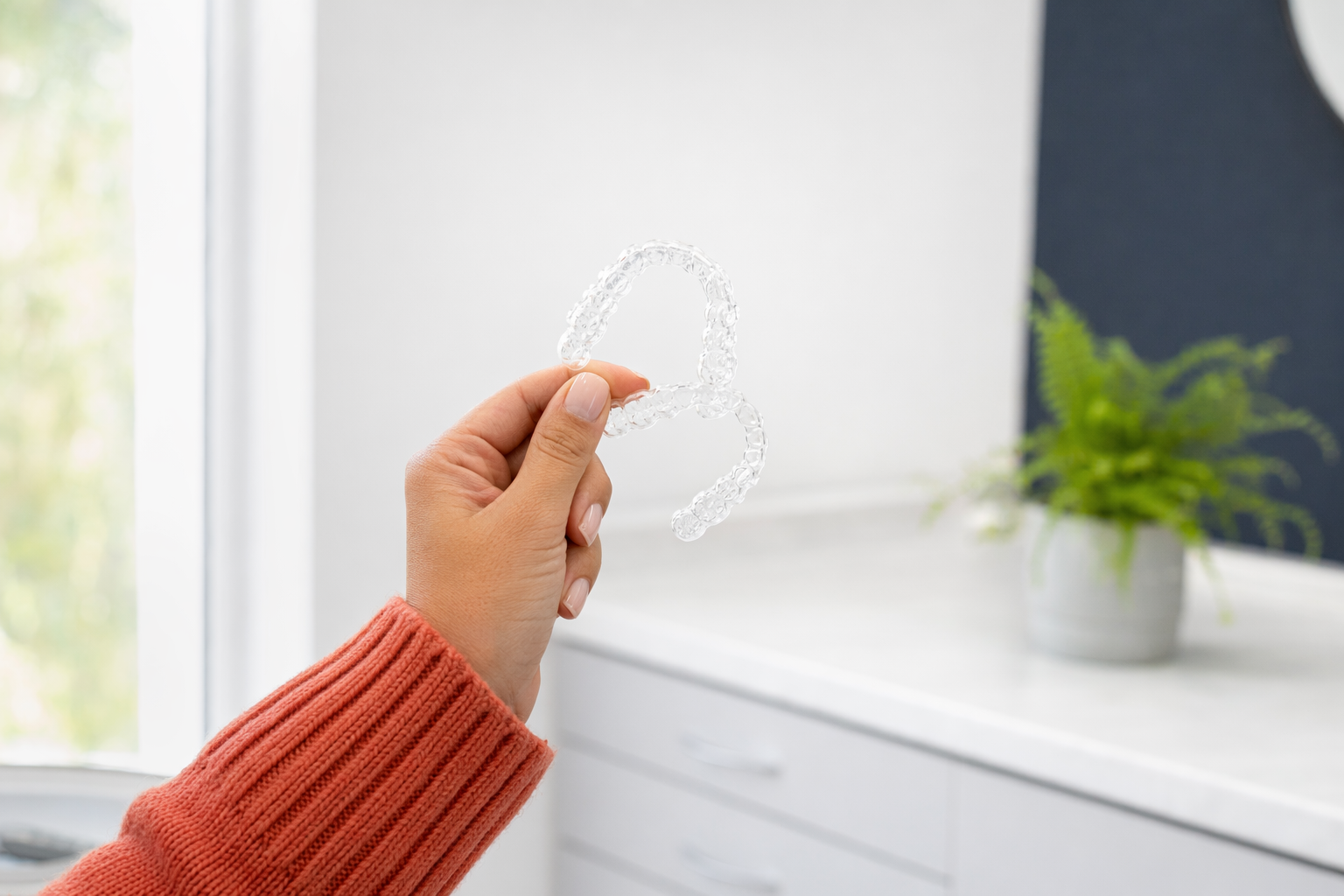
The short answer
The safest basic routine is simple: rinse, brush gently, and keep them in the case when they are not in your mouth.
For many people, this works well:
- Rinse the aligners with lukewarm or cool water when you take them out.
- Clean them gently with a soft toothbrush and a small amount of clear, mild soap.
- Rinse again well before putting them back in.
- Brush and floss your teeth before wearing them again.
That routine helps with odor, cloudy buildup, and stains from saliva and plaque. It also helps the trays stay more comfortable.
What to avoid:
- Hot water, which can warp plastic
- Toothpaste with gritty abrasives, which can scratch the trays
- Colored soaps or mouthwashes that may leave residue or tint
- Wrapping aligners in a napkin, where they are easy to lose
If you are still deciding between clear aligners and braces, this guide on braces vs clear aligners can help.
A good daily cleaning routine
A steady routine matters more than fancy products. Most buildup comes from normal daily wear, not from doing one thing terribly wrong.
Morning and night are the easiest times to clean aligners well.
- When you remove them, rinse them right away. Dried saliva is harder to clean later.
- Use a separate soft toothbrush just for the aligners if you can. That keeps them cleaner and avoids toothpaste residue.
- Add a drop of clear, unscented or mild soap to the brush. Gently clean the inside and outside.
- Pay extra attention to the edges and the areas that sit against the chewing surfaces of the teeth.
- Rinse very well so no soap taste stays behind.
Then clean your mouth before you put the aligners back in.
- Brush your teeth
- Floss if food is stuck
- If you cannot brush right away, at least rinse your mouth and the aligners until you can clean properly
Why this matters: putting aligners back onto unclean teeth can trap food and plaque against the teeth for hours.
If you wear retainers now or later, many of the same cleaning habits apply. You can read more on retainers.

What works, what does not, and why
People hear a lot of cleaning tips online. Some are helpful. Some can damage the trays or make them look worse.
Usually helpful:
- Cool or lukewarm water
- A soft toothbrush
- Mild clear soap
- Soaking in a cleaner if your orthodontist says it is okay for your type of tray
Often not a good idea:
- Hot water: heat can change the shape of the aligner. Even small warping may affect fit.
- Whitening toothpaste: many are too abrasive and can leave fine scratches that make aligners look cloudy.
- Colored mouthwash: it can stain or leave a strong taste.
- Boiling, dishwashers, or harsh cleaners: these can damage the plastic.
Some people ask about soaking aligners every day. A short soak can help with odor or film, but the best method depends on the tray material and your orthodontist's instructions. This is not medical advice. If you are unsure, ask the licensed orthodontist supervising your treatment.
A few practical tips:
- Drink plain water with aligners in if your orthodontist says that is fine
- Remove them for coffee, tea, soda, juice, and meals unless your orthodontist gives different instructions
- After drinking anything sugary or dark, clean your teeth before putting them back in when possible
If you are still comparing treatment types and typical costs, see costs for general US ranges. Real price depends on the case, the area, and insurance.
How to deal with stains, smell, or cloudy buildup
Even careful people sometimes notice a smell or a foggy look. Usually, that means the aligners need a little more consistent cleaning, not aggressive scrubbing.
Try this simple approach:
- Rinse the aligners as soon as you remove them.
- Gently brush with mild soap for a little longer than usual.
- Rinse very well.
- Clean your teeth and tongue before putting them back in.
- Keep the aligners in a ventilated case when not wearing them.
If odor keeps coming back, check the basics:
- Are you brushing after meals?
- Are you flossing often enough to remove trapped food?
- Are the aligners sitting in a closed container while still wet and dirty?
- Are you drinking coffee, tea, or sweet drinks while wearing them?
For stains, the most important step is prevention. Dark drinks and smoking can discolor clear trays. Scrubbing harder usually does not solve that and may scratch the plastic.
If the aligners suddenly do not fit, feel sharp, or stay cloudy or smelly even after careful cleaning, contact the licensed orthodontist who is treating you. Only that office can evaluate fit and safety after an exam. AlignLoom does not provide care or treatment; we are a free matching service.
What to do next
If you already have aligners, keep your routine simple and gentle. If you are choosing treatment, ask practical questions before you start.
Bring these questions to the consultation:
- How should I clean this specific type of aligner?
- Can I use a soaking cleaner, and how often?
- What drinks are okay while wearing them?
- What should I do if a tray smells bad, gets stained, or stops fitting well?
- How often will the orthodontist check progress in person?
When you compare offices, remember:
- You choose who to see
- Ask for the plan and price in writing before starting
- Verify the orthodontist's state license yourself
- Insurance coverage varies, and orthodontic benefits often have a lifetime maximum, commonly around $1,000-$3,000
- Typical US treatment ranges are estimates only: clear aligners $3,000-$8,000, but the real price depends on the case, area, and insurance
If you want help finding local options, you can get matched for free. You may also find this guide useful: how to choose an orthodontist.
Rinse your aligners when you take them out, clean them gently with a soft toothbrush and mild clear soap, avoid hot water and harsh products, and ask your licensed orthodontist if you are unsure. If you still need treatment, AlignLoom can match you with local orthodontists for free.