Retainers
Retainers help hold teeth in place after braces or clear aligners. This page is general, educational information only, not medical advice, and only a licensed orthodontist can tell you what is appropriate after an in-person exam.
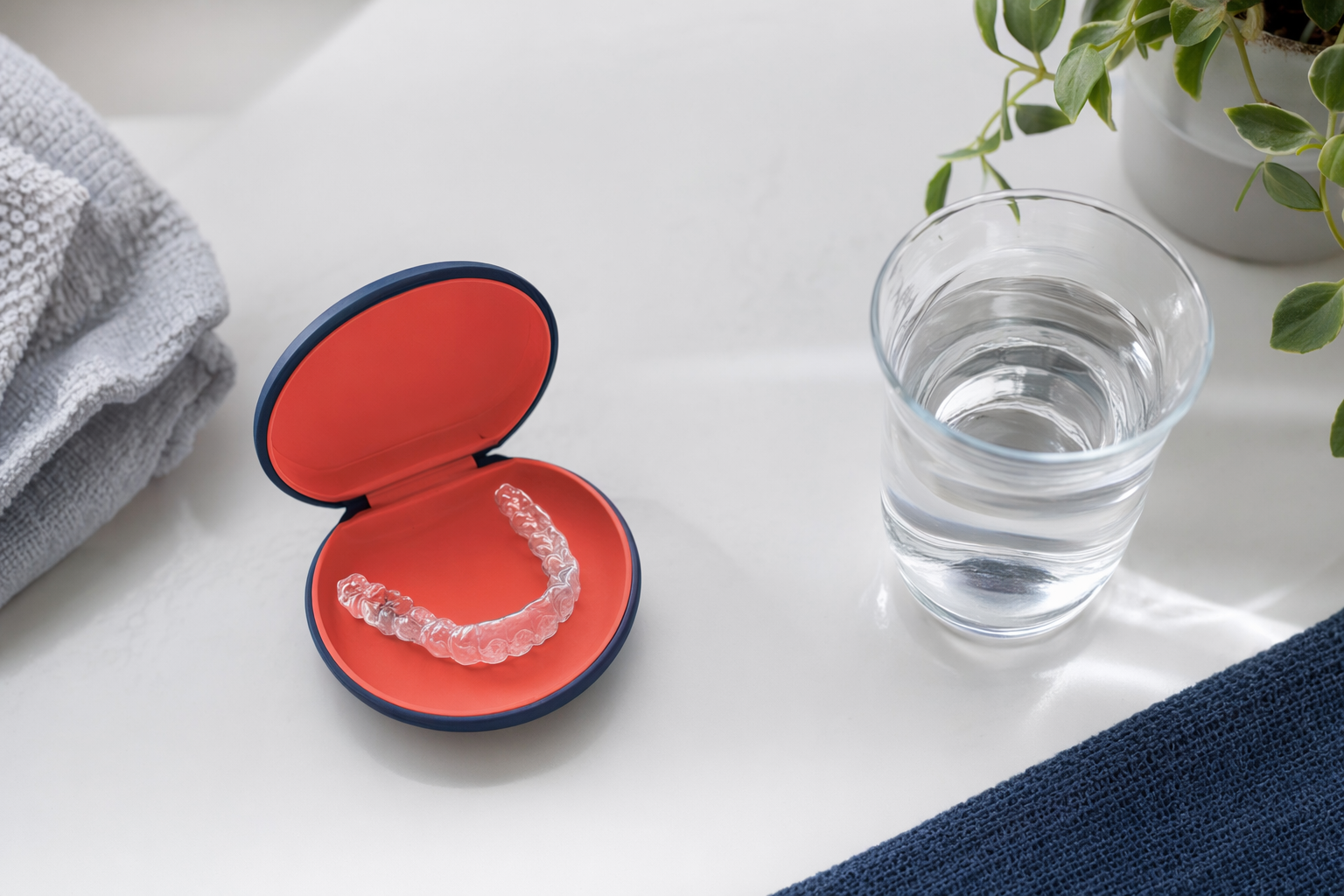
What retainers do
After teeth move, they can slowly shift back. A retainer is meant to help keep the new position after orthodontic treatment.
Retainers are common after metal braces, ceramic braces, or clear aligners. Some are removable. Some are fixed behind the teeth. The right type depends on the person, the tooth movement, daily habits, and what a licensed orthodontist sees during an exam.
A simple truth: finishing treatment is not the end. Retention is part of the process. If you stop wearing a removable retainer too soon, teeth may move.
If you are still deciding between treatment types, this comparison may help: braces vs clear aligners.
How it usually works
Most people get a retainer after active treatment ends. The orthodontist explains when to wear it and how to care for it.
A typical process looks like this:
- Treatment ends. Braces come off, or aligner treatment is completed.
- Retention plan is chosen. The orthodontist may recommend a removable retainer, a fixed retainer, or sometimes a combination.
- Fit is checked. The retainer should feel snug, not painfully tight.
- Wear schedule begins. Many people are told to wear a removable retainer full-time at first, then only at night later. The exact schedule varies.
- Follow-up visits happen. The orthodontist checks fit, wear, and whether the teeth are staying stable.
- Repairs or replacement may be needed. Removable retainers can crack, warp, or get lost. Fixed retainers can loosen.
There is no single schedule that fits everyone. Only a licensed orthodontist can advise you after an in-person exam. AlignLoom does not provide exams or care. We are a free matching service that helps you connect with licensed orthodontists near you.

Who retainers may suit
Retainers are usually discussed with people who have already finished tooth-moving treatment and want to maintain the result.
They may be a practical fit for:
- Teens finishing braces who need a clear routine at home
- Adults finishing clear aligner treatment who want to protect the progress they paid for
- People who can follow a daily habit like nighttime wear
- People who want to ask about a fixed option because they worry they may forget a removable one
Things to think about honestly:
- If you tend to lose small items, ask about replacement cost and fixed-retainer options.
- If you grind your teeth, clench, or are hard on appliances, ask what may hold up better.
- If you travel often, ask whether you should keep a backup retainer.
- If your child is still growing, ask how growth may affect long-term retention.
This is not medical advice. A licensed orthodontist can explain what is appropriate for your case and why.
Typical cost in the US
Retainer pricing can vary more than people expect. The typical US range is about $100-$500 per set. That is an estimate, not a quote or guarantee.
The real price depends on:
- The type of retainer
- Your area
- Whether it is included in the original treatment fee
- Whether you need a replacement or repair
- Your insurance benefits, if any
Some orthodontic treatment plans include the first retainer or a limited retainer package. Others charge separately. If you have insurance, check the details carefully. Many dental plans that include orthodontic benefits have a lifetime maximum, often around $1,000-$3,000, and not every retainer expense is covered.
Helpful next steps:
- Ask for the total fee in writing before you start or before you agree to replacement
- Ask whether one set or multiple sets are included
- Ask what replacement costs if it is lost, broken, or no longer fits
- Review orthodontic insurance explained and general costs before you decide
AlignLoom does not set prices. We help you get matched, at no cost, with licensed orthodontists so you can compare options yourself.
Timeline and daily life
The retainer timeline is usually longer than people expect. Many patients wear a removable retainer full-time at first, then switch to nighttime wear. Some people are told to keep wearing a retainer at night for the long term to help hold alignment.
Daily life is often manageable, but it still takes effort.
With a removable retainer:
- You need to remember it every day
- You usually remove it for eating unless told otherwise
- It needs regular cleaning
- Heat can damage some materials, so do not leave it in a hot car
With a fixed retainer:
- You do not need to remember to put it in
- Cleaning can take more care around the wire
- It may come loose and need repair
Neither option is automatically better for everyone. The best choice depends on your habits, your teeth, and what the orthodontist recommends after examining you.
If you are at the start of the process and need help finding local care, you can get matched for free.
Pros, tradeoffs, and what to ask
Retainers can be very helpful, but it is smart to go in with clear eyes.
Common benefits
- Helps maintain tooth position after treatment
- Can protect the time and money already spent on braces or aligners
- Removable options are simple to take in and out
- Fixed options can help people who know they forget routines
Common tradeoffs
- Removable retainers can be lost or broken
- Fixed retainers may need extra cleaning and occasional repairs
- You may need long-term nighttime wear
- Replacement costs can add up over time
Bring these questions to the consultation:
- What kind of retainer do you recommend for me, and why?
- How many hours a day should it be worn at first, and for how long?
- What signs mean it no longer fits and should be checked?
- What is included in the fee, and what costs extra?
- What happens if it is lost, cracked, or stops fitting?
- How often do you want follow-up visits?
- If you are recommending a fixed retainer, how should it be cleaned?
You choose who to see. You choose whether to move forward. And you should confirm the plan and price in writing before starting. For more help comparing providers, see how to choose an orthodontist.
How AlignLoom can help
AlignLoom is not a dentist or orthodontist, and we do not diagnose, treat, or provide care. We are a free, multilingual matching service for US families and adults, including new immigrants and non-native English speakers.
We can help you:
- Find licensed orthodontists near you
- Compare treatment discussions and office policies
- Ask clearer questions about retainers, timelines, and written pricing
- Move at your own pace without paying us for the match
Before you choose a provider, verify the orthodontist's license yourself and make sure you understand the plan, the fee, and follow-up expectations.
If you want to explore retention after treatment, or compare options more broadly, start here: retainers, treatments, or get matched.
Retainers help keep teeth from moving after braces or clear aligners, but the type, schedule, and cost are different for each person. Use AlignLoom to get matched for free with licensed orthodontists, ask for the plan and price in writing, and verify the provider's license before you start.