Braces vs clear aligners
Both braces and clear aligners can straighten teeth, but they work differently in daily life, cost, and follow-up care. This page is general, educational information only, not medical advice, and only a licensed orthodontist can tell you what fits your case after an in-person exam.
The short answer
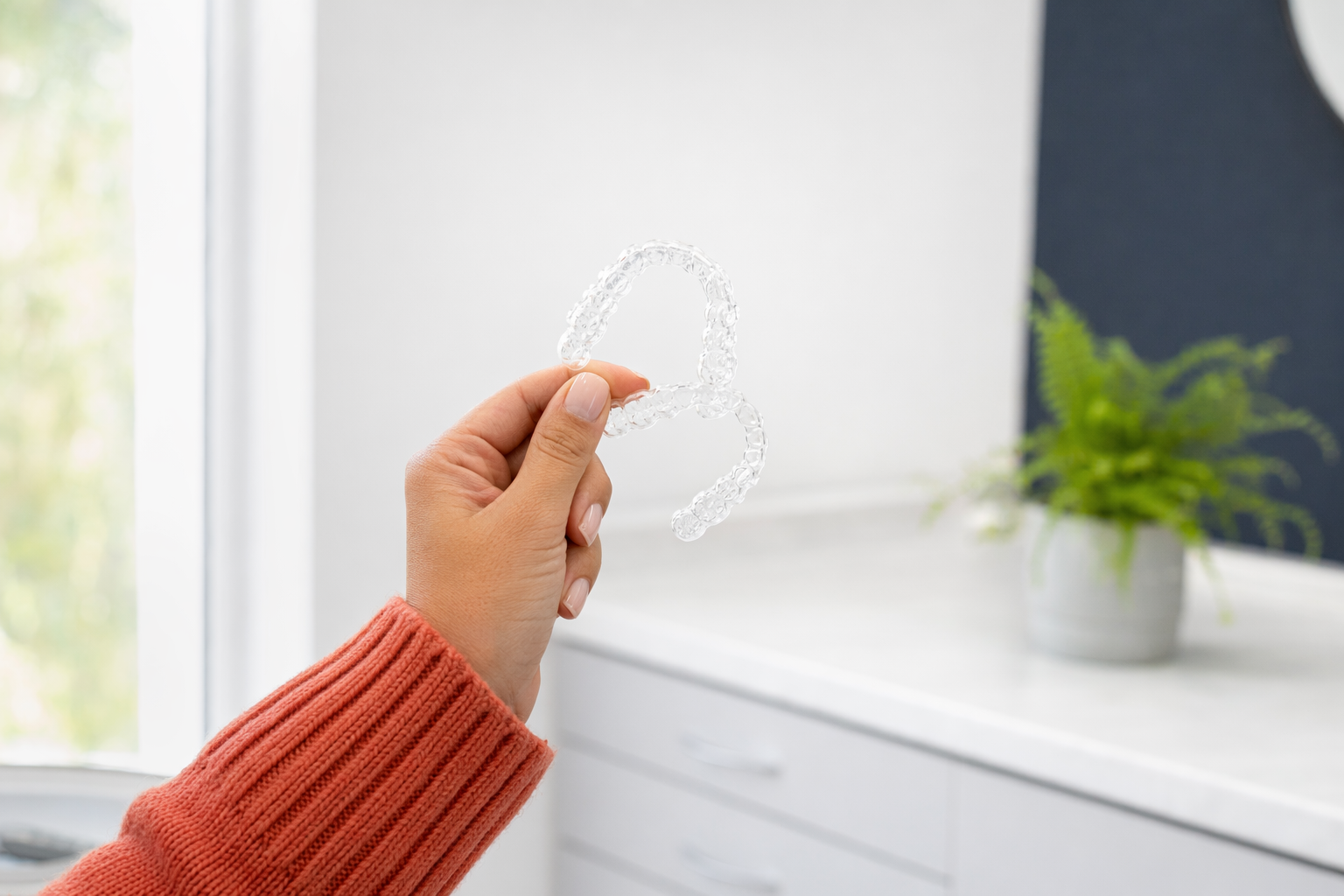
If you want the simplest overview, here it is: braces stay on your teeth all the time, while clear aligners can be removed for eating, drinking anything other than water, and brushing.
That difference affects almost everything else.
- Braces can be a practical choice for many complex tooth movements because they are always working.
- Clear aligners can feel easier for meals and brushing, but they only work as planned if you wear them as directed by your orthodontist.
- Metal braces are usually the lowest typical price range.
- Ceramic braces are less noticeable than metal for some people, but they often cost more.
- Clear aligners may look less visible day to day, but the real price depends on the case, the area, and your insurance.
Typical US ranges are estimates, not quotes:
- Metal braces: $3,000-$7,000
- Ceramic braces: $4,000-$8,000
- Clear aligners: $3,000-$8,000
- Retainers after treatment: $100-$500 per set
If you want a simple side-by-side overview, see braces vs clear aligners and treatments.
How daily life is different
This is where many families decide.
Braces
Braces are fixed to the teeth, so you do not take them out. That can be helpful for people who do not want to remember trays every day. But braces also change some routines.
- You need to clean carefully around brackets and wires.
- Some foods may be harder to eat.
- Broken brackets or poking wires can mean an extra office visit.
- They are visible when you smile.
Clear aligners
Aligners are removable trays. Many adults and teens like that they are harder to notice. But removable also means more responsibility.
- You take them out for meals and snacks.
- You brush before putting them back in.
- Losing trays or forgetting to wear them can slow progress.
- They can be easier for sports or musical instruments for some people, but not for everyone.
A good question to ask yourself is not "Which sounds best?" but "Which routine can I actually follow for months?"
For many families, the best choice is the one that fits real life: school, work, meals, travel, and how organized the patient is.
You can read more about specific options here: metal braces, ceramic braces, and clear aligners.

Cost, insurance, and what the price really means
Cost matters, and it is smart to ask direct questions.
First, remember this: the cheapest-looking option is not always the lowest total cost. Extra visits, replacement trays, lost retainers, and follow-up care can affect what you pay over time.
Typical ranges in the US are:
- Metal braces: $3,000-$7,000
- Ceramic braces: $4,000-$8,000
- Clear aligners: $3,000-$8,000
- Retainers: $100-$500 per set
These are estimates only, not guarantees. Your actual price depends on:
- how simple or complex the tooth movement is
- where you live
- how long treatment is expected to last
- whether insurance helps
- what is included in the office fee
Insurance can help, but many dental plans have an orthodontic lifetime maximum, often around $1,000-$3,000. That means the plan may pay only up to that limit for orthodontic treatment, even if treatment costs more.
Before starting, ask for the plan and price in writing. Ask what is included and what is not. For example:
- records and follow-up visits
- emergency visits
- retainers after treatment
- replacement aligners or retainers
For a fuller breakdown, visit costs or orthodontic insurance explained.
AlignLoom does not set treatment prices. We are a free matching service that helps you connect with licensed orthodontists near you so you can compare options yourself.
How to choose between them
You do not need to decide alone before seeing a specialist. A licensed orthodontist should examine you in person and explain what is realistic for your teeth.
Still, you can prepare with a simple checklist.
Braces may be worth asking about if:
- you want something fixed in place
- you worry trays may be lost or not worn enough
- you want to compare the lowest typical price range first
- your orthodontist says your case may be better managed that way
Clear aligners may be worth asking about if:
- you want a less noticeable option
- you are willing to remove and reinsert trays many times a day
- you are consistent with routines
- your orthodontist says they are appropriate for your case
Use these steps at the consultation:
- Ask which options are appropriate for your case.
- Ask the orthodontist to explain the pros and trade-offs of each in plain language.
- Ask how often follow-up visits are usually needed.
- Ask what happens if trays are lost or a bracket breaks.
- Ask for the total expected cost and what is included.
- Verify the orthodontist's license yourself before starting.
If you need help finding local offices to compare, you can get matched for free. You choose who to contact, and you confirm the plan and price directly with the orthodontist.
Common mistakes families and adults make
A few mistakes come up again and again. Avoiding them can save money, stress, and time.
- Choosing by ads alone. Photos and promises do not tell you if an option fits your case.
- Focusing only on monthly payment. A lower monthly payment can still mean a higher total cost.
- Not asking what happens after treatment. Most people need retainers to help keep teeth in position. Learn more about retainers.
- Assuming clear aligners are always faster or always cheaper. That is not true for every case.
- Ignoring daily habits. A treatment only works well when the patient can follow the routine.
- Using mail-order or at-home aligner kits without understanding the limits. Remote options may sound simple, but they are not the same as in-person orthodontic care and may not fit every case.
- Starting without written details. Always confirm the recommended plan, expected fees, and payment terms in writing.
This is not medical advice. It is general education to help you ask better questions and compare choices more clearly.
What to do next
If you are feeling stuck, keep it simple.
- Read a basic comparison of braces vs clear aligners.
- Make a short list of your priorities: visibility, budget, routine, and convenience.
- Meet with a licensed orthodontist for an in-person exam.
- Compare the treatment plan and price in writing before you commit.
If language is a barrier, bring a family member, ask for written notes, or use a service that supports multilingual families. AlignLoom is built to help adults and families understand their options in plain English and connect, at no cost, with licensed orthodontists nearby.
You stay in control. You choose who to see. You verify the license. You decide whether to move forward.
Braces stay on. Clear aligners come out. Both can work, but the best choice depends on your teeth, your daily habits, and your budget. Compare written plans from a licensed orthodontist, check what insurance covers, and do not start until you understand the full cost.