Clear Aligners vs Braces for Adults
Both clear aligners and braces can be options for adults, but the better fit depends on your teeth, your routine, and your budget. This page is general, educational information only, not medical advice, and only a licensed orthodontist can tell you what may work for you after an in-person exam.
The short answer
For many adults, there is no one "best" choice. There is only the better match for your case and your day-to-day life.
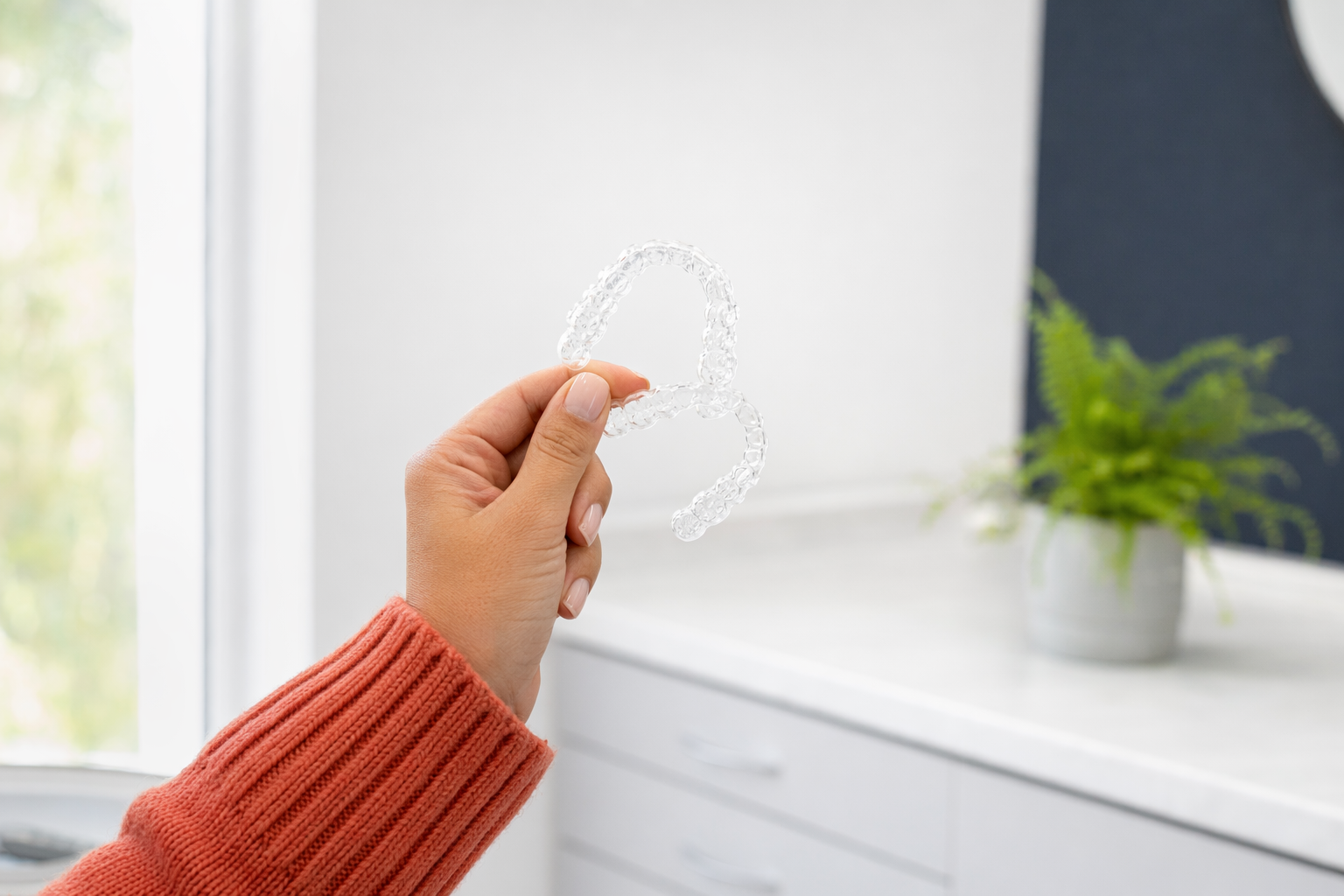
Clear aligners may appeal to adults who want a less noticeable option and are comfortable following a schedule closely. They are removable, which can make eating and brushing simpler.
Braces may appeal to adults who do not want to remember to remove and reinsert trays, or whose orthodontist recommends fixed treatment for the kind of tooth movement needed.
A good rule of thumb:
- If you want something removable and discreet, ask about clear aligners.
- If you want something always on and working without needing to take it in and out, ask about metal braces or ceramic braces.
- If cost matters most, compare your options side by side and get the full plan and price in writing before you start.
You do not need to decide alone. An adult can compare both options with a licensed orthodontist after an exam, then choose based on the treatment plan, price, and daily fit.
How adults usually compare the two
Adults often care about more than just looks. They want to know what treatment will feel like in real life.
Appearance
- Clear aligners are usually less visible from a normal speaking distance.
- Metal braces are more noticeable.
- Ceramic braces may blend in more than metal, but they are still braces.
Daily routine
- Clear aligners must be worn as directed by the treating orthodontist. Because they are removable, success can depend on staying consistent.
- Braces stay on your teeth, so you do not have to remember to put them back in after meals.
Eating
- With clear aligners, you usually remove them to eat and drink anything other than water.
- With braces, some foods may need extra caution because they can bend wires or break brackets.
Cleaning
- Clear aligners can make brushing and flossing feel more familiar because you remove them first.
- Braces can take more time to clean around brackets and wires.
Office visits
- The visit schedule depends on the orthodontist and your case. Ask how often check-ins are expected and what happens if something breaks or stops fitting.
Comfort and speech
- Either option can feel different at first. Some adults notice temporary soreness or speech changes when adjusting. That does not mean one is right for everyone.
If you are still unsure, this side-by-side guide can help: braces vs clear aligners.

Cost, insurance, and what adults should ask
For adults, cost is often the deciding factor. The honest answer is that the real price depends on the case, the area, and your insurance.
Typical US ranges:
- Metal braces: about $3,000-$7,000
- Ceramic braces: about $4,000-$8,000
- Clear aligners: about $3,000-$8,000
- Retainers after treatment: often $100-$500 per set
These are estimates, not quotes or guarantees.
Insurance can help, but not always in the same way for adults as for children. Some dental plans include orthodontic coverage, and many have an orthodontic lifetime maximum, often around $1,000-$3,000. Some plans cover children only. Some cover adults too. Some cover braces and aligners differently.
Before you start, ask for:
1. The total treatment price in writing
2. What is included, such as visits, appliances, and retainers
3. Whether insurance is expected to reduce the cost, and by how much
4. The down payment and monthly payment options
5. What happens financially if treatment changes partway through
You can learn more about typical pricing on our costs page and get a simple breakdown of coverage terms in orthodontic insurance explained.
Because AlignLoom is a free matching service, not a provider, we cannot quote your treatment price or tell you which option you need. A licensed orthodontist can review your teeth in person and explain your choices.
When adults lean toward aligners, and when they lean toward braces
There are practical reasons adults choose one over the other.
Adults often ask about clear aligners when they:
- Work in client-facing jobs and want a less noticeable option
- Travel often and prefer a removable appliance
- Want to brush and floss without working around brackets
- Feel confident they can follow a strict wear schedule
Adults often ask about braces when they:
- Do not want the responsibility of removing and replacing trays
- Prefer a fixed option that stays on all the time
- Want to compare lower-cost options first
- Are open to either metal or ceramic braces
What matters most is not trend or marketing. It is whether the option fits your teeth, your habits, and the orthodontist's treatment plan.
Be careful with mail-order or at-home aligner kits. If you are considering that route, ask who reviews the case, how progress is checked, what happens if teeth do not move as expected, and whether you can get an in-person exam before starting. For many adults, having a licensed orthodontist nearby for questions and follow-up can feel more reassuring.
What to do next
If you are an adult trying to choose, keep it simple.
- Learn the basics. Read about treatments so you know the common options.
- Compare both choices. Ask a licensed orthodontist to explain braces and clear aligners for your case after an in-person exam.
- Get the details in writing. Confirm the treatment plan, estimated timeline, total price, what is included, and retainer costs before starting.
- Verify the orthodontist's license yourself. That is always worth doing.
- Choose what fits real life. The best plan is one you understand and feel comfortable following.
If you want help finding local options, get matched with licensed orthodontists near you. The service is free for families and adults. You choose who to contact, and you decide whether to move forward.
This information is general and educational only. It is not medical or dental advice.
If you are an adult choosing between braces and clear aligners, compare both with a licensed orthodontist after an in-person exam, ask for the full price and what is included in writing, check your insurance, and pick the option that fits your teeth, budget, and daily routine.