Ceramic Braces vs Clear Aligners
Both options can help move teeth, but they fit different needs and routines. This page gives general educational information only, not medical advice. A licensed orthodontist can tell you what fits your case after an in-person exam.

Quick overview
Ceramic braces are fixed brackets and wires attached to the teeth. The brackets are tooth-colored or clear-looking, so they are usually less noticeable than metal braces.
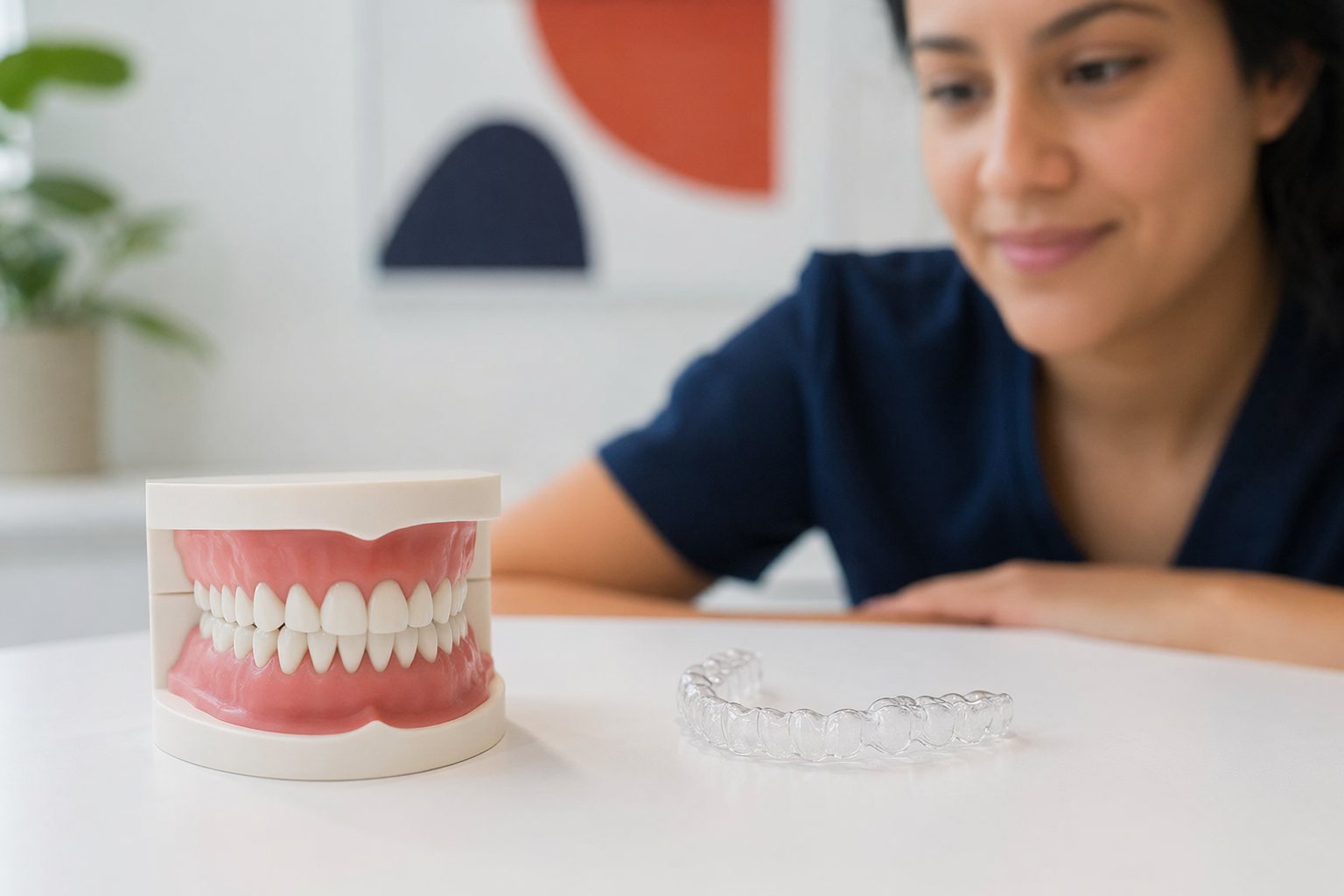
Clear aligners are removable plastic trays that fit over the teeth. You take them out to eat, drink anything except water, and brush.
Both are common orthodontic treatments. Both have pros and tradeoffs. The right choice depends on your bite, your habits, your budget, and what a licensed orthodontist sees during an in-person exam.
If you are still comparing options, our guide on braces vs clear aligners may help.
Side-by-side: what most families care about
Here is the honest, practical comparison many parents and adults want.
- Appearance
- Ceramic braces are usually more discreet than metal braces, but the brackets and wire are still visible up close.
- Clear aligners are often less noticeable in photos and daily conversation.
- Removability
- Ceramic braces stay on all the time until the orthodontist removes them.
- Clear aligners come out for meals and brushing, which many adults and teens like.
- Daily discipline
- Ceramic braces do not depend on remembering to put them back in.
- Clear aligners only work as planned if worn as directed by the orthodontist. If trays are left out often, treatment can be delayed.
- Eating
- With ceramic braces, you usually need to avoid hard, sticky, and chewy foods that can break brackets or wires.
- With clear aligners, you remove the trays to eat, so there are fewer food restrictions. But you do need to clean your teeth before putting them back in.
- Cleaning
- Ceramic braces can be harder to brush and floss around.
- Clear aligners require tray cleaning plus regular brushing and flossing.
- Comfort
- Either option can cause soreness, especially after adjustments or when switching to a new tray.
- Braces may irritate the cheeks or lips at times. Aligners may feel tight and can affect speech briefly for some people.
- Complex cases
- Some tooth movements and bite issues may be easier to manage with braces.
- Some mild to moderate cases may work well with clear aligners.
- Only a licensed orthodontist can say what is appropriate for your specific case.
- Cost
- Ceramic braces typically range from $4,000-$8,000 in the US.
- Clear aligners typically range from $3,000-$8,000.
- These are typical ranges, not quotes or guarantees. The real price depends on the case, the area, and your insurance. You can read more at costs.
Who each option may suit
No website can tell you which treatment you should choose. This is not medical advice. Still, these simple patterns can help you prepare for a consultation.
Ceramic braces may suit someone who:
- Wants a less noticeable fixed option
- Does not want to remember trays all day
- Has a case that may need more control from a fixed appliance
- Is okay with food restrictions and careful cleaning around brackets
Clear aligners may suit someone who:
- Really values a low-visibility look
- Wants to remove the appliance for meals and important events
- Can keep up with wearing trays consistently
- Is comfortable with brushing after eating when away from home
For teens and busy adults, the real question is often routine.
- Will you reliably wear removable trays every day?
- Will food restrictions with braces be hard for you?
- Do you want a treatment that stays on, or one you remove yourself?
- Are you comparing appearance, convenience, or total cost first?
If you want a broader look at treatment types, see treatments or compare clear aligners with other options.
Cost, insurance, and what affects the final price
Families often ask, "Is one cheaper?" Sometimes yes, sometimes no. The overlap is large.
Typical US ranges:
- Ceramic braces: $4,000-$8,000
- Clear aligners: $3,000-$8,000
- Retainers after treatment: $100-$500 per set
Important: these are estimates, not bids, quotes, or promises. The final price depends on:
- How complex the tooth movement is
- How long treatment is expected to take
- Where you live
- What is included in the office fee
- Your dental insurance
Some dental plans help with orthodontics, but many have a separate lifetime maximum, often around $1,000-$3,000. That means insurance may reduce the cost, but often does not cover all of it. Before you start, ask for the full treatment plan and price in writing. Confirm what insurance is expected to pay and what you would owe.
Our plain-language guide on orthodontic insurance explained can help you prepare.
What to ask at the consultation
A good consultation should leave you clearer, not more confused. You are allowed to ask simple, direct questions.
Bring these questions with you:
- Am I a candidate for both ceramic braces and clear aligners?
- Why are you recommending one over the other for my case?
- What are the tradeoffs in appearance, comfort, cleaning, and routine?
- What is the full estimated cost, and what does it include?
- How much is expected from insurance, and what is my part?
- Will I need retainers after treatment, and what do they cost?
- What happens if a bracket breaks or an aligner is lost?
- What follow-up visits are usually needed?
Also do two simple checks yourself:
- Verify the orthodontist's license with your state licensing board.
- Read the treatment plan and price carefully before you agree to start.
If you need help finding local options, get matched with licensed orthodontists near you. AlignLoom is a free matching service. We do not provide orthodontic care.
A practical next step
If you are choosing between ceramic braces and clear aligners, try this simple approach:
- Pick your top 3 priorities: appearance, routine, cost, food freedom, or fixed treatment.
- Compare at least two licensed orthodontists if you can.
- Ask each office to explain why they recommend one option for your case.
- Get the plan and total estimated cost in writing before you decide.
You do not have to know the answer before you speak with an orthodontist. You just need the right questions. AlignLoom can help you connect with local licensed orthodontists so you can compare options and decide what feels right for you or your child.
Ceramic braces stay on your teeth and are less visible than metal braces. Clear aligners come out for eating and brushing and are often less noticeable. The better choice depends on your bite, your habits, and your budget. This is general information, not medical advice. Ask a licensed orthodontist which option fits your case, and get the plan and estimated price in writing before you start.